Debating the World: Unleashing the Power of British Parliamentary Format in Geography Education
22 April 2025 - Academic
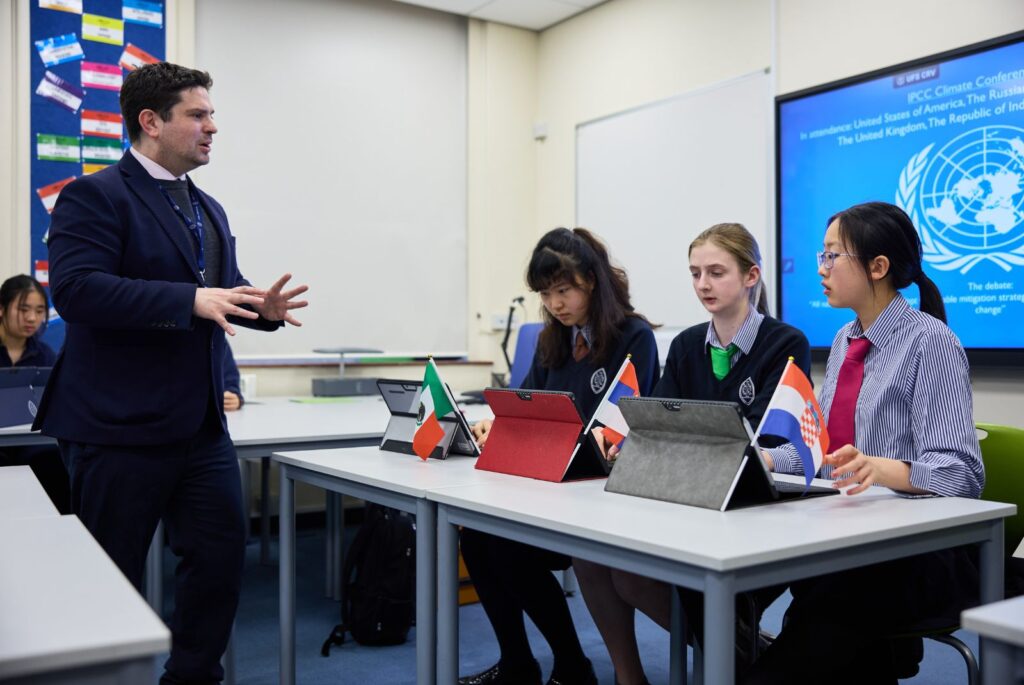
Incorporating live debates into education can significantly enhance pupils’ learning experiences. The British Parliamentary (BP) debate format, known for its structured and dynamic nature, offers a unique opportunity to develop critical thinking, communication and collaborative skills. In the Geography Department, we have explored the benefits of encouraging live debates. These debates have focussed on contemporary issues such as the effectiveness of the UK Government in closing the gap in social inequality and the mitigation strategies the UK Government should invest in to combat climate change in the future.
Understanding the British Parliamentary Debate Format
The BP debate format involves four teams of two speakers, divided into two sides: the Government and the Opposition. Each team presents arguments for or against a motion, with speeches followed by rebuttals and closing statements. Points of Information (POIs) allow for real-time questioning and engagement, making the debate lively, interactive and thought-provoking.
Benefits of Live Debate in Geography Education
There are a number of educational benefits to engaging in parliamentary-style debate within lessons:
- Enhanced Critical Thinking Skills
Debating requires pupils to analyse complex geographical issues, evaluate evidence, and construct coherent arguments. This process sharpens their critical thinking abilities and helps them understand multiple perspectives.
- Improved Communication Skills
The format emphasises clear and persuasive communication. Our pupils learn to articulate their ideas confidently, listen actively and respond thoughtfully to opposing viewpoints. These skills are invaluable in both academic and real-world contexts.
- Increased Engagement and Interest
Live debates make our geography lessons more engaging and interactive. The competitive element of debating motivates the girls to participate actively and stay informed about current geographical issues.
- Development of Research Skills
Preparing for a debate involves extensive research on the given topic. Pupils learn to gather, evaluate and synthesise information from various sources, enhancing their research skills and geographical knowledge. This develops their independent learning and encourages a flipped learning approach, a great skill for their future studies and careers.
- Collaboration and Teamwork
Debating requires girls to work in teams, fostering collaboration and teamwork. They learn to support each other, build on their peers’ ideas and present a united front during the debate.
- Enhanced Listening and Note-Taking Skills
Effective debating involves careful listening and note-taking. Pupils must pay attention to their opponents’ arguments to formulate rebuttals and counterpoints, improving their listening and analytical skills.
- Confidence Building
Participating in live debates helps many of our girls build self-confidence. They become more comfortable speaking in public, defending their viewpoints and handling challenging questions.
We are delighted by the positive impact debating in the Geography Department has had on our pupils’ academic progress and are committed to making debate a central part of the geography curriculum for years to come.
Mr Simon Bannister
Head of Geography
Keep up to date with further news from Wycombe Abbey on our social channels.